Clarify your goal before trying something new
Are you trying to reduce noise, sleep better or find out whether breathing pauses occur? A clear goal makes it easier to evaluate an approach and explain your needs.
If sleep apnea is suspected, seek a medical evaluation instead of continuing to buy new products. Less noise alone does not show that sleep apnea is treated.
Sources: NHLBI: Diagnosis · AASM longitudinal testing guidance, 2021
How the options compare
This is an overview, not a personal treatment recommendation or a ranking. These approaches have different purposes and levels of supervision.
Scroll the table horizontally on smaller screens.
| Approach | Possible role | Limitations and follow-up |
|---|---|---|
| Side sleeping | Snoring that is worse on the back | May be difficult to maintain; does not establish that apnea is controlled |
| Avoiding alcohol close to bedtime | Symptoms that worsen after alcohol | Does not rule out sleep apnea or replace prescribed treatment |
| Evaluation of nasal congestion | Persistent trouble breathing through the nose | The cause matters; a nasal product does not address every airway problem |
| Custom oral appliance | Selected adults after professional assessment | Dental, bite and jaw effects need monitoring |
| CPAP | Diagnosed sleep apnea when prescribed | Mask comfort, settings and regular follow-up matter |
Sources: MedlinePlus: Snoring — adults · NHLBI: Treatment · AADSM patient fact sheet
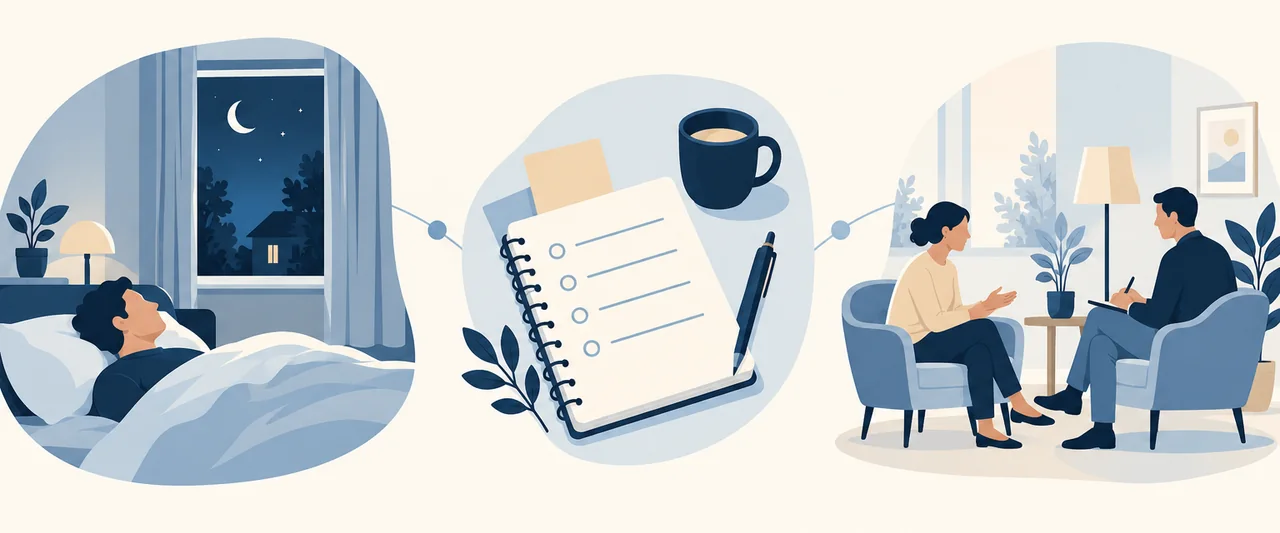
Keep a trial manageable and know when to seek help
If a clinician has advised a practical change, agree on what to watch for. Notes can be brief: what you tried, whether it was workable and how you and your partner experienced the night. Keep health information in a place you control.
An approach that cannot be used consistently needs another conversation. Describe the difficulty rather than assuming you simply need to try harder.
Be specific about a product’s purpose
Nasal strips, a night guard for tooth grinding and an oral appliance prescribed for sleep apnea are different products. Check the intended use, instructions, limits and follow-up arrangements.
Some intraoral devices require a prescription. Over-the-counter availability is specific to the device and its authorized use; it does not establish suitability for your symptoms. Snorehelper does not sell products or rank individual purchases.
Four questions for a more useful appointment
- What do you think is causing my symptoms, and what is still uncertain?
- How will we check whether this works for the problem we are treating?
- Which side effects or changes should I report?
- What will we do if the first approach does not work?
Choose the order based on what is still unknown
The easiest product to buy is not necessarily the best first step. If someone has seen breathing pauses or you are very sleepy during the day, evaluation matters more than comparing store products.
The nose, sleep position and the throat can each play different roles. A product targeting nasal airflow should not be assumed to resolve a problem elsewhere.
You do not have to commit to one path forever. Evaluation may lead to a practical trial, testing or input from another professional. Ask which changes should trigger the next step.
Sources: NHLBI: Diagnosis · NHLBI: Treatment
Make “it helps” more precise
Ask what changed, whether you can use the approach regularly and what drawbacks it creates. Less noise and better daytime functioning are separate outcomes. With sleep apnea, control of the breathing disorder is another goal.
A device left in a drawer may say little about its effect when used, but it says a lot about its fit with your life. Explain what makes use difficult so your provider can consider adjustments or alternatives.
Agree on who will follow up and when. Otherwise a trial can continue indefinitely without a clear assessment. Extensive self-monitoring is not a requirement.
Scroll the table horizontally on smaller screens.
| Question | Useful information | What it cannot establish |
|---|---|---|
| Is the sound quieter? | Your observations and your partner’s | That sleep apnea is controlled |
| Can I use it? | What makes use easy or difficult | Medical effectiveness by itself |
| Is breathing better? | Clinician-directed follow-up testing when indicated | A reliable answer from a snoring app alone |
Be cautious about one-size-fits-all promises
A before-and-after audio clip does not tell you who used the product, for how long, what else changed or whether side effects occurred. Ask what was measured, in whom, and whether the evidence concerns the same device and use.
Customer reviews can describe comfort or delivery. They do not replace evaluation or establish that a disease was treated. We do not describe a product as “best” without a stated, defensible comparison method.
EXPLORE THE EVIDENCE
Sources and further reading
These sources support the explanations. General information does not replace an individual healthcare assessment.
- NHLBI: Treatment Treatment options, including lifestyle changes, positive airway pressure and oral devices.Source checked October 28, 2026
- AADSM patient fact sheet Patient information about dental assessment, medical diagnosis and oral appliance care.Source checked October 28, 2026
- FDA intraoral-device special-controls guidance FDA guidance on intended use, prescription devices and devices specifically cleared for over-the-counter use.Source checked October 28, 2026
- AASM longitudinal testing guidance, 2021 The 2021 guidance on follow-up sleep testing, including after non-PAP treatments.Source checked October 28, 2026
- FTC: Health Products Compliance Guidance Substantiation, relevant scientific evidence, and limits of testimonials in health marketing.Source checked October 28, 2026
- NHLBI: Diagnosis Clinical evaluation, sleep studies and other investigations used to diagnose sleep apnea.Source checked October 28, 2026
- MedlinePlus: Snoring — adults Causes of adult snoring, practical measures and symptoms that warrant medical evaluation.Source checked October 28, 2026